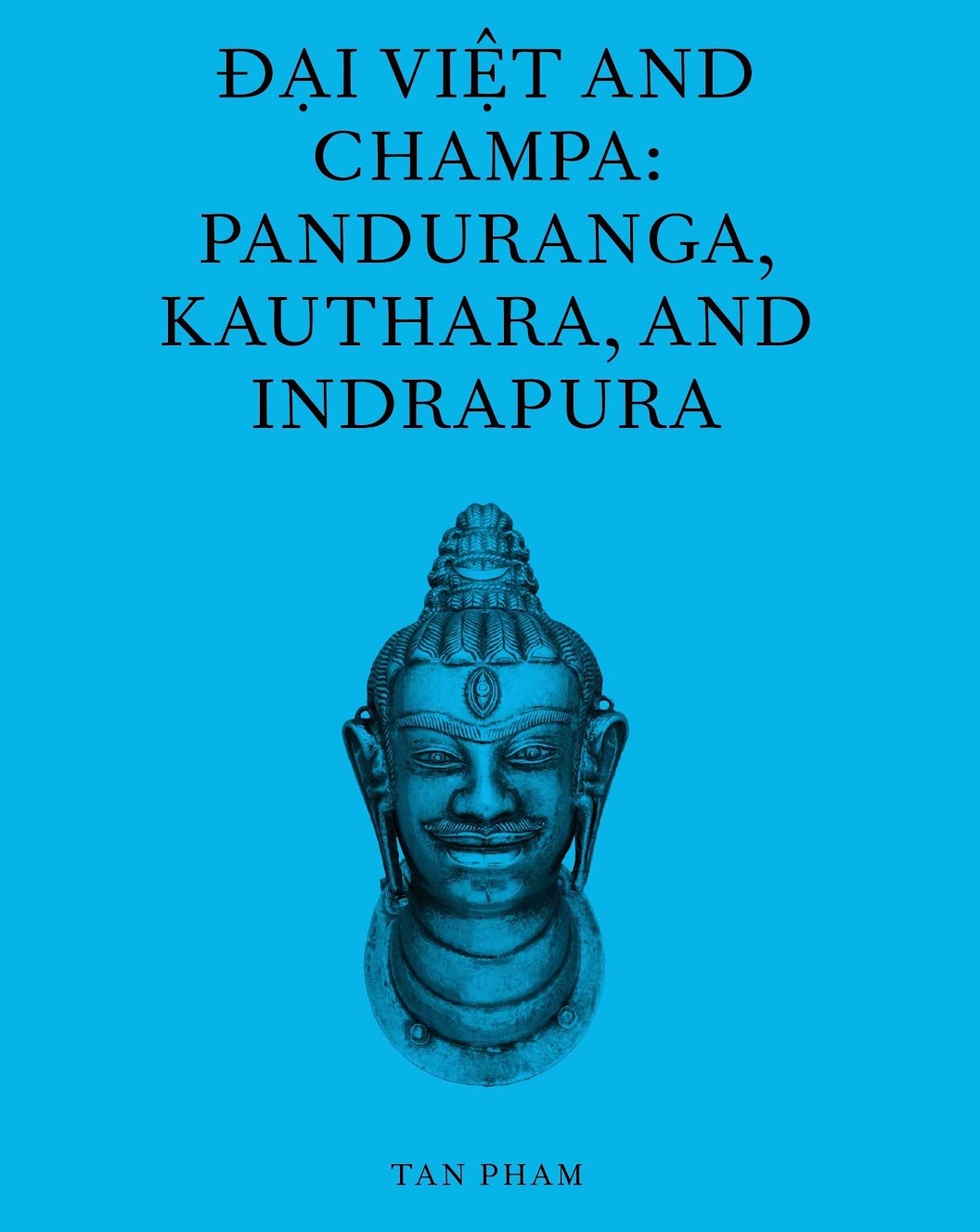
Chào các bạn, một số bạn ở VN muốn đọc sách eBook mình mới xuất bản, Volume 3B: Đại Việt and Champa: Panduranga, Kauthara, and Indrapura nhưng không có thẻ Visa hay Momo để mua trên mạng cho nên mình đã để giá zero (free) trên Google Play Books trong 2 tuần đến 15/12. Xem đính kèm (book.google.com.vn)
Hầu hết du khách đến Việt Nam sẽ có lúc ghé thăm tháp Chăm hoặc xem một số đồ tạo tác của người Chăm trong bảo tàng. Những thứ này do người Chăm của vương quốc Champa nay đã biến mất để lại. Chúng độc đáo, tinh tế và huyền bí. Những người xây dựng và chạm khắc những tác phẩm tuyệt đẹp này từng sinh sống ở miền Trung Việt Nam và miền Bắc Nam Bộ, trải dài hơn 1.000 km từ Bắc vào Nam. Ngày nay, với dân số chưa đến 200.000 người, người Chăm sinh sống chủ yếu ở Ninh Thuận, Bình Thuận và các tỉnh khác ở đồng bằng sông Cửu Long.
Lịch sử Champa được chia thành ba thời đại: Thời đại thứ nhất (thế kỷ thứ 5 đến thế kỷ 10), thời đại thứ hai (thế kỷ 10 đến thế kỷ 15) và thời đại thứ ba (thế kỷ 15 đến thế kỷ 19). Cuốn sách này đề cập đến Kỷ nguyên thứ nhất, bao gồm ba Gia tộc vĩ đại Gaṅgārāja, Vicitrasagara và Ujora tại ba địa điểm. Gia tộc đầu tiên gắn liền với Simhapura, Trà Kiệu ở tỉnh Quảng Nam. Gia tộc thứ hai nối liền với Virapura và Po Nagar ở Panduranga và Kauthara, ngày nay là các tỉnh Ninh Thuận, Bình Thuận, Khánh Hòa. Gia tộc thứ ba nối với Indrapura, Tu viện Đồng Dương ở tỉnh Quảng Nam. Cuốn sách cũng trình bày tổng quan về Chămpa, mô tả tháp Chăm và bản đồ di tích Chăm ở các tỉnh Quảng Bình, Quảng Trị và Thừa Thiên-Huế.
Để thu thập tư liệu cho cuốn sách này, tác giả đã thăm viến hầu hết các di chỉ được đề cập trong sách và tham khảo các văn khắc Chăm, các tác phẩm lịch sử Trung Quốc và Việt Nam. Tiến sĩ Anne-Valérie Schweyer, Giám đốc Nghiên cứu tại CNRS (Trung tâm Nghiên cứu Khoa học Quốc gia Pháp), một nhà văn khắc và là học giả hàng đầu thế giới về nghiên cứu Champa, đã nhận xét và viết lời tựa cho cuốn sách. Cô kết luận: Thông qua chuyến du hành của mình, Tấn Phạm làm sáng tỏ lịch sử và nghệ thuật của các vương quốc Chăm từ thời điểm thành lập cho đến thời kỳ hưng thịnh, đồng thời làm cho sự hiện diện ngày nay của họ trở nên rõ ràng. Thật vinh dự khi được theo bước chân của ông, điều đó giúp hiểu rõ hơn về một phần lịch sử huy hoàng của Việt Nam.
Cuốn sách này là Tập 3B của bộ sách Chuyện Lữ Khách Về Quá Khứ Việt Nam; nó tiếp tục ở chỗ Tập II, Một Ngàn Năm – Truyện Giao Châu, các vương quốc Lâm Ấp, Phù Nam và Chân Lạp, kết thúc. Cuốn sách có 384 trang và có 235 hình vẽ và hình minh họa.
Tác giả Tân Phạm
The book title is Đại Việt and Champa: Panduranga, Kauthara, and Indrapura.
It has 384 pages and contains 235 figures and illustrations (many photographs I took in 2023 and 2024).
I am fortunate to have Dr. Anne-Valérie Schweyer, the Research Director at CNRS (French National Centre for Scientific Research), an epigraphist and a world-leading scholar in Champa studies, comment and write the foreword for the book.
The book is available on Amazon and Google Play as an eBook, paperback and hardcover.
Details of the book are as follows:
Đại Việt and Champa: Panduranga, Kauthara, and Indrapura
Volume 3B of A Traveller’s Story of Vietnam’s Past
Most travellers to Vietnam will, at some point, visit a Cham tower or view some Cham artefacts in a museum. These were left behind by the Cham people of the now-vanished kingdom of Champa. They are unique, exquisite, and mythical. The people who built and carved these beautiful works once inhabited central Vietnam and the northern part of the south, which stretches over 1,000 kilometres from north to south. Today, with a population of less than 200,000, the Chams live primarily in Ninh Thuận, Bình Thuận, and other provinces in the Mekong Delta.
Champa’s history is broadly divided into three eras: the First Era (5th to 10th centuries), the Second (10th to 15th centuries), and the Third (15th to 19th centuries). This book deals with the First Era, including the three great Houses of Gaṅgārāja, Vicitrasagara, and Ujora at three locations. The first house is associated with Simhapura, modern Trà Kiệu in Quảng Nam province. The second house is connected with Virapura and Po Nagar in Panduranga and Kauthara, present-day Ninh Thuận, Bình Thuận, and Khánh Hòa provinces. The third house is linked with Indrapura, Đồng Dương Monastery in Quảng Nam province. The book also presents an overview of Champa, a description of the Cham tower and maps of Cham ruins in Quảng Bình, Quảng Trị, and Thừa Thiên-Huế provinces.
To collect materials for this volume, the author visited most of the sites mentioned in the book and referred to Cham inscriptions, Chinese and Vietnamese historical works. Dr. Anne-Valérie Schweyer, the Research Director at CNRS (French National Centre for Scientific Research), an epigraphist and a world-leading scholar in Champa studies, commented and wrote the foreword for the book. She concludes: Through his travels, Tan Pham unravels the history and art of the Cham kingdoms from the time of their creation to their apogee, while at the same time making their present-day presence visible. It is a great pleasure to follow in his footsteps, which lead to a better understanding of a glorious part of Việt Nam’s history.
This book is Volume 3B of the book series, A Traveller’s Story of Vietnam’s Past; it continues where Volume II, One Thousand Years – The Stories of Giao Châu, the Kingdoms of Linyi, Funan and Zhenla, ends. The book has 384 pages and contains 235 figures and illustrations.
A shortened Table of Contents is shown below.
Chapter 1 – A summary of this book
Chapter 2 – A general overview of Champa
2.1 – The land and its people
2.2 – A trip to the past
2.3 – Champa and Đại Việt (10th to 15th centuries)
2.4 – Champa and the Khmer Empire (10th to 15th centuries)
2.5 – The religions of Champa
2.6 – A tour of Champa
Chapter 3 – The towers of Champa
3.1 – The design of a Cham tower
3.2 – The bricks and the resin adhesive
3.3 – Champa deities and icons
Chapter 4 – Panduranga – Land of the gods and vineyards, the House of Vicitrasagara – Champa (8th to 9th centuries)
Chapter 5 – Po Nagar (Mother of the Land) Temple
Chapter 6 – Indrapura, the House of Uroja – Champa (9th to 10th centuries)
Chapter 7 – Indrapura and Buddhist Monasteries
7.1 – Indrapura and Buddhism
7.2 – The Đồng Dương Buddhist Monastery
Chapter 8 – The Cham ruins and artefacts of Quảng Bình province
Chapter 9 – The Cham ruins and artefacts of Quảng Trị province
Chapter 10 – The Cham ruins and artefacts of Thừa Thiên-Huế province
Chapter 11 – Conclusion
Appendix 1 – Wuli, Chiêm Động, Ulik and other names of places in Champa
Kind regards,
Tan Pham (NZ)
Author of a book series on Vietnamese history: A Traveller’s Story of Vietnam’s Past.
Volume One: The Bronze Drums and The Earrings. ISBN: 978-0-473-59804-4.
Volume Two: One Thousand Years – The Stories of Giao Châu, the Kingdoms of Linyi, Funan and Zhenla. ISBN 978-0-473-63527-5.
Volume 3B: Đại Việt and Champa: Panduranga, Kauthara, and Indrapura. ISBN 978-1-0670208-1-1, ISBN 979-8-3469430-7-5
 Nghiên Cứu Lịch Sử